
@rx14 @senpai tfw not using vimtutor
haskell is basically lisp with an order of magnitude fewer parentheses

@rx14 @senpai tfw not using vimtutor
haskell is basically lisp with an order of magnitude fewer parentheses
Akiba wrote@rx14 @senpai tfw not using vimtutor
Late reply, but I use vim all the time now, learnt it by simply using it, not from a tutor.
based_bluetawn wroteTake a free Python course online from MIT. Learn python because it teaches you the basics of pretty much any language. If you want to get intense C++ or rackett.
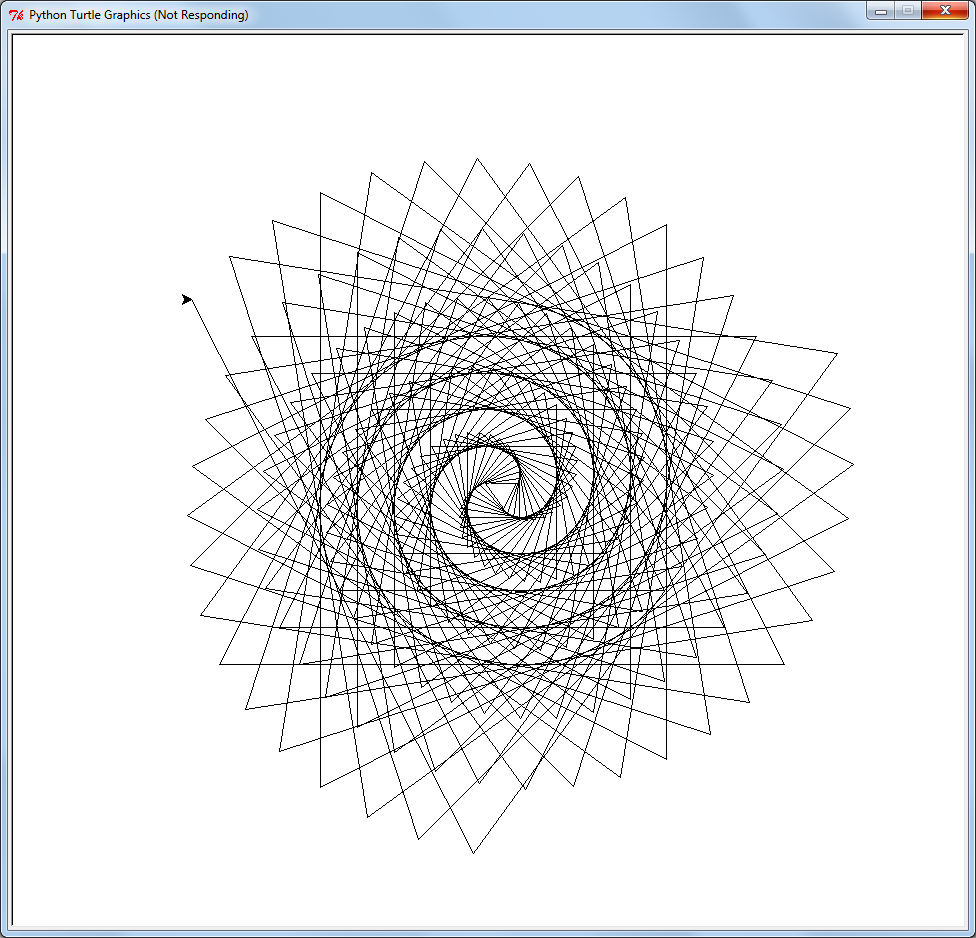
Python is pretty great, tbh. I'd recommend looking at the "turtle" module. My introductory class at uni was pretty lax, so I spent the entire time making geometric art out of tiny bits of code.
The language also has one of the best, most concise and informative tutorials I've ever read. Here, have a link!
Backlash wrotebased_bluetawn wroteTake a free Python course online from MIT. Learn python because it teaches you the basics of pretty much any language. If you want to get intense C++ or rackett.
Python is pretty great, tbh. I'd recommend looking at the "turtle" module. My introductory class at uni was pretty lax, so I spent the entire time making geometric art out of tiny bits of code.
The language also has one of the best, most concise and informative tutorials I've ever read. Here, have a link!
Using Tk would always cause my old (2009-2014) PC to bluescreen. Had to learn PyQt instead!
Akiba wrote@rx14 @senpai tfw not using vimtutor
haskell is basically lisp with an order of magnitude fewer parentheses
Eh, that's basically wrong on all accounts. Since haskell is functional, whereas lisp is whatever you want it to be. Lisp doesn't constrain you to a single paradigm.
As far as on topic is concerned, there have been plenty of awesome suggestions, so I can't offer much, but then I figured I have quite a bit of experience, so I'll give you a rundown of how I started programming, and how you might want to do it differently, or the same. Forgive me if this ends up a bit of a ramble, I've not had my coffee.
Way back when I was much younger I wanted my own home page, so I wrote a little HTML & CSS, which was good. But that's not really programming (styled markup != programming). But still, it got me into the idea of learning to code. So to dynamically generate the page, I used the one tool everyone was using at the time, PHP. I would not recommend this language, it was haphazardly thrown together and only someone from a programming background could know how to write something in PHP which isn't complete spaghetti.
Skip forward some years, experimenting with a few languages including C, Go, JavaScript, Scheme and all sorts of other lovelies, I started university where they insist on teaching a language which I had always avoided: Java.
For the first time I found myself actually learning to use a paradigm rather than a language, understanding how to model ideas as code rather, that is to say, the semantics of programming, rather than just syntax. There are many books and resources that will lead you down this path, and I might add a couple of them at the bottom of this post, but if you choose to follow this you might want to google "learning OOP" rather than "learning Java", or "learning functional programming" instead of "learning Haskell". Since this experience, I've picked up python in a day, after piecing together its syntax & semantics from open source repositories. I wouldn't say I'm a fantastic python developer, but my point is more that once you have learned to program, learning a language is extremely easy.
Given all of that, I would actually recommend Java, the way I learned was with BlueJ & Objects First with Java. BlueJ is a cross-platform open source IDE for Java, but focuses more on OOP than on the code, and the book is heavily tied to it. I've since migrated to IntelliJ, since BlueJ is not really fit for anything but learning - and can even be a bit of a pain for that at times.
Otherwise, you could learn a Lisp, which is pretty much paradigm neutral, and immediately ascend to godhood.
matt wrote>Java
>Great features
The day Java supports native unsigned ints I will consider it worth something.
Akiba wrotehaskell is basically lisp with an order of magnitude fewer parentheses
Haskell is more closer to ML than to Lisp
KuroAku wrotematt wrote>Java
>Great featuresThe day Java supports native unsigned ints I will consider it worth something.
Why does it need to? If this is performance related then there are many other things that will provide better performance than allowing developers to specify unsigned integers.
RX14 wroteKuroAku wrotematt wrote>Java
>Great featuresThe day Java supports native unsigned ints I will consider it worth something.
Why does it need to? If this is performance related then there are many other things that will provide better performance than allowing developers to specify unsigned integers.
For handling binary files, IMO.
Once I had to read a binary file that had uint32 numbers for some pointers. Management wanted it in Java because it was the language the application was made (it was a server-side one). Also, the client already had implemented the API for the file, so changing the file structure was a no no. I had to make one of the ugliest hacks to convert the uint32 to a long making sure that the stream only read 4 bytes and the carry bit for sign was ignored.
Now Java 8 has some support, but is not a primitive.
Apart from that Java is fine, specially when designing OO architectures.
KuroAku wroteRX14 wroteKuroAku wrotematt wrote>Java
>Great featuresThe day Java supports native unsigned ints I will consider it worth something.
Why does it need to? If this is performance related then there are many other things that will provide better performance than allowing developers to specify unsigned integers.
For handling binary files, IMO.
Once I had to read a binary file that had uint32 numbers for some pointers. Management wanted it in Java because it was the language the application was made (it was a server-side one). Also, the client already had implemented the API for the file, so changing the file structure was a no no. I had to make one of the ugliest hacks to convert the uint32 to a long making sure that the stream only read 4 bytes and the carry bit for sign was ignored.
Now Java 8 has some support, but is not a primitive.
Apart from that Java is fine, specially when designing OO architectures.
Man that's shit, DataInput should have a readUnsignedInt and readUnsignedLong. Pretty sure there will be a library for that though. Java's stdlib sucks, and yeah the primitive types kinda suck too. At least Java 8 is some kind of improvement.
Tooling pretty much saves the show for java though. The wealth of libraries on maven, the ides (especially IDEA) and debugging is pretty nice.
RX14 wroteTooling pretty much saves the show for java though. The wealth of libraries on maven, the ides (especially IDEA) and debugging is pretty nice.
True. A well configured pom.xml is god tier.
KuroAku wroteRX14 wroteTooling pretty much saves the show for java though. The wealth of libraries on maven, the ides (especially IDEA) and debugging is pretty nice.
True. A well configured pom.xml is god tier.
Ehh, i prefer gradle myself, because I find it cleaner and more powerful. Plus I have more experience with gradle over maven, but whatever.